The anamnesis is composed by civic information, physical activity or hobbies, occupation, history of the disease as well as the patients bio-psychosocial environment.
The various bio-psychosocial factors are important to take into account when managing a patient with chronic pain.
Lumbar assessment
The different part of the lumbar spine assessment
- Anamnesis
- Type of pain
- Objectives
- Red flags
- Neurological assessment
- Joint assessment
- Muscle assessment
- Visceral assessment
- Synthesis
- Patient follow-up
- Appendices
- Sources
1. Anamnesis

2. The type of pain
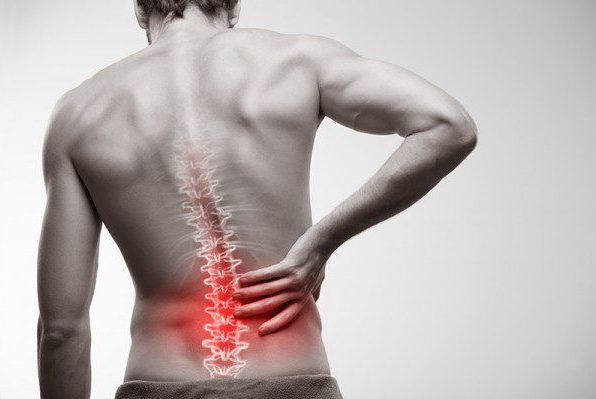
Pain is first assessed by determining the part of the sensory and the emotional in the pain intensity. Then thanks to a body chart adapted to lumbar pathologies, where the patient can himself represent his pain.
Finally, for a good treatment, it is useful to clearly define the type of pain. Pain can be classified into three categories, nociceptive, neuropathic or by central sensitization (see source 1), in particular thanks to the questionnaires of Neuropathic Pain (DN4, here) and of the Central Sensitization Inventory (CSI, here).
3. Treatment goals and objectives
The objectives are defined with the patient in order to know this expectations of the treatments. They allow us to know how are the expectations of the patient ‘s pain evolution. They help the patients compliance and adherence to the therapeutic plan to achieve the goals developed together.



5. Neurological assessment
If nervous tissue damage is suspected, an assessment of sensitive and motor deficits is done to start the neurological examination.
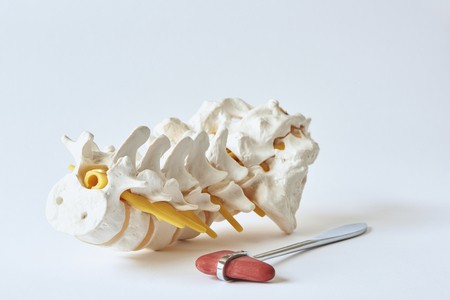
Osteo-tendon reflexes are tested to determine if there is central or peripheral nervous system damage. In peripheral involvement, the slump test, the Single Leg Rise (SLR) and the femoral nerve tension test (Prone Knee Bend) specify the type of neuralgia. Last part part of neurological examination is dedicated to the radiating pain syndromes such as Maigne syndrome, tunnel syndromes (obturator nerve, lateral cutaneous nerve of the thigh), piriformis syndrome assessed by the Pace maneuver, and FADIR test to finish the lumbar stenosis is identified by the Cook cluster (see source3).
Prone Knee Band

Manoeuvre de Pace

FADIR test

6. Joint assessment
Mobility of the lumbar segment is assessed by dynamic tests, pain by provocation tests and ligament instability with the prone instability test.
A dysfunction of the sacroiliac joint is demonstrated with the Laslett cluster (see source 4). If necessary, attention is paid to the hip joint which may be the site of mechanical or periarticular conflict.
Cluster de Laslett

Prone instability test


7. Muscle assessment
The Shirado and Sorensen tests are used to assess the muscle condition of the flexors and extensors of the trunk. These results allow to calculate the ratio indicating a possible muscular imbalance, in particular in athletes with low back pain. Motor control of the pelvis is also evaluated.

8. The visceral assessment
It can be performed in case of suspicion of referred or projected pain of visceral abdominal or pelvic origin.

9. The Synthesis
The summary makes it possible to highlight the essential points of the assessment and to avoid confusion in the face of all the information provided by the patient.

10. Patient follow-up
A part is dedicated to patient follow-up in order to note the changes session after session as well as the advice and exercises to be performed.

11. Appendices
The complete appendices and details each section of the assessment with a description of the clinical signs, the reference values of the tests, with summary tables and diagrams.
In case of doubt, a quick glance at the appendices will provide the answer to your question.

Sources
- Nijs J, Apeldoorn A, Hallegraeff H et al. Low Back Pain: Guidelines for the Clinical Classification of Predominant Neuropathic, Nociceptive, or Central Sensitization Pain. Pain Physician. 2015 May-Jun;18(3):333-46.
- Verhagen AP, Downie A, Popal N, Maher C, Koes BW. Red flags presented in current low back pain guidelines: a review. Eur Spine J. 2016 Sep;25(9):2788-802.
- Cook C, Brown C, Michael K. The clinical value of a cluster of patient history and observational findings as a diagnostic support tool for lumbar spine stenosis. Physiother Res Int. 2011 Sep;16(3):170-8.
- Laslett M, Aprill CN, McDonald B, Young SB. Diagnosis of sacroiliac joint pain: validity of individual provocation tests and composites of tests. Man Ther. 2005 Aug;10(3):207-18.
